

What is Trauma?
Key Takeaways:
- Trauma refers to the emotional impact of experiencing or being exposed to serious harm or threat.
- Not everyone exposed to a traumatic event will experience trauma.
- Trauma can be single, repeated (complex), intergenerational, or vicarious.
- People respond to trauma in different ways, and reactions are normal responses to abnormal events.
- Trauma can affect both adults and children, sometimes immediately or years later.
- Most people recover with time and support, but some develop longer-term mental health difficulties.
- Compassionate, trauma-informed support can promote healing and recovery.
A potentially traumatic event refers to an event where a person is exposed to serious injury, death or a threat of harm to themselves, or someone close to them. The emotional impact of this event on the person who experienced it is called 'trauma.' Events are often called 'Potentially Traumatic' as not everyone who is exposed to an event will go on to have an emotional reaction, or experience 'trauma.'
Trauma is the emotional reaction that people experience to these events. This definition is deliberately broad. This is because the term 'trauma' refers to how someone experiences an event and how it impacts them, as opposed to what happened during the event itself.
In this article: Experiences of Trauma | Common Reactions to Trauma | Impact of Trauma | Prevalence of Trauma | Supporting Recovery
Experiences of trauma
There are many kinds of events and experiences that can cause someone to experience trauma. Trauma is sometimes categorised into types, determined by how frequently, or in what way the person was exposed to the traumatic event.
Some of the types of trauma you may hear about are described below.
Single Incident Trauma
Single incident trauma or single 'index' trauma, also known as acute trauma, refers to unexpected, one-time events that may come "out of the blue", don't re-occur regularly, and are time-limited. Examples of single incident trauma include:
Complex Trauma
Complex trauma results from repeated or ongoing traumatic events. Complex trauma is often interpersonal (i.e. occurs as a result of one persons actions on another), and frequently occurs during times when people are developing in important ways, such as early childhood or adolescence. Examples of complex trauma include:
Intergenerational Trauma
Intergenerational trauma occurs when the effects of trauma experienced by one generation are unintentionally passed down to their children and future generations, even if those children did not experience the original event. This happens because children are affected by how trauma impacts their parents, caregivers, and community.
When adults are living with the effects of trauma, such as feeling disconnected, struggling to manage emotions, or finding it hard to build close relationships, they may have difficulty providing consistent warmth, safety, and coping skills to their children. As these children grow up, they may carry ongoing distress and, without support, may struggle to provide the same sense of safety and attachment to their own children.
Over time, this can create a cycle where the impacts of trauma continue across generations. Trauma can also disrupt important social, cultural, and community connections that support wellbeing, affecting the social, cultural, and spiritual health of families and communities.
Some people who may experience intergenerational trauma include:
- Aboriginal and Torres Strait Islander peoples (Darwin, Vervoot, Vollert & Bluestein, 2023)
- Refugee families (Sangalang & Vang, 2017)
- Children of veterans (Dekel & Goldblatt, 2008; Forrest, Edwards & Daraganova, 2018)
- Children of parents continuing to be affected by their own trauma (Isobel, Goodyear, Furness & Foster, 2019).
To learn more about Intergenerational Trauma and Aboriginal and Torres Strait Islander peoples, watch our video resources: What is Intergenerational Trauma and Warning Signs of Intergenerational Trauma.
Vicarious Trauma
Vicarious trauma occurs when someone is exposed to another person’s trauma, often through hearing, reading, or viewing their experiences. The effects can be similar to those experienced by people directly affected, including changes in how a person sees themselves and the world. Vicarious trauma can occur in many settings, particularly for people who are exposed to trauma as part of their work. Professions at risk of vicarious trauma include:
- mental health workers and social support/care workers
- doctors, nurses and other medical professionals
- emergency service workers
- lawyers
- journalists
- researchers
Common Reactions To Trauma
Everyone responds differently to a traumatic event, and reactions can vary widely. These reactions can feel frightening or overwhelming, but they are normal responses to abnormal situations, and many people experience them. For most, symptoms improve with time and support from loved ones. If you continue to struggle, professional mental health support can help with recovery.
Adults
The following are some common symptoms adults with trauma might experience:
- crying, sadness, or tearfulness
- feeling numb
- irritability and anger
- difficulty managing emotions
- difficulties with social skills or connecting with others
- experiencing 'dissociation' or feeling 'out of it'
- risk taking or unusually risk behaviour
- thoughts of suicide or self-harm
- re-experiencing the event(s) through nightmares and flashbacks
- feeling jumpy, on-edge, or easily startled
- worrying or experiencing anxiety
- losing appetite or eating more or less
- poor self-image, low self-esteem and low self-worth
- having difficulties sleeping
- withdrawing from others
- avoiding reminders of the event.
You can read more about the common reactions in adults following trauma in our article, The Aftermath of Trauma - Common Reactions Following a Traumatic Experience.
Children
It is important to recognise that while young people may experience symptoms of trauma similar to adults, there are also other specific signs of trauma. As we know, many young people experience significant barriers to seeking help or talking about their trauma. Knowing these signs can help families, loved ones and professionals to recognise that a child or young person has been impacted by a traumatic event and intervene early to reduce the likelihood of the impact of trauma lasting for years or becoming evident later in life. As well as experiencing some of the reactions as adults, children and young people who have been exposed to traumatic events might also experience:
- fear/separation anxiety
- expressing concern about their safety
- bed wetting
- school refusal
- low tolerance for frustration
- reenacting trauma during play
- sexualised behaviour
- being bullied, or engaging in bullying behaviour
Impact of Trauma
Trauma and its effects vary from person to person. Reactions may appear immediately or weeks, months, or even years later. Most people experience some emotional response, which often improves within a few weeks, especially with support from family and friends — a process known as natural recovery or resilience. For others, symptoms may persist, interfere with daily life, or develop into conditions such as Acute Stress Disorder (ASD), Posttraumatic Stress Disorder (PTSD), or Complex PTSD (C-PTSD). We discuss some of the potential long term impacts of trauma on mental health in our article, Trauma and Mental Illness.
Prevalence of Trauma
Although traumatic events are common, not everyone who experiences a traumatic event will go on to develop a mental health condition.
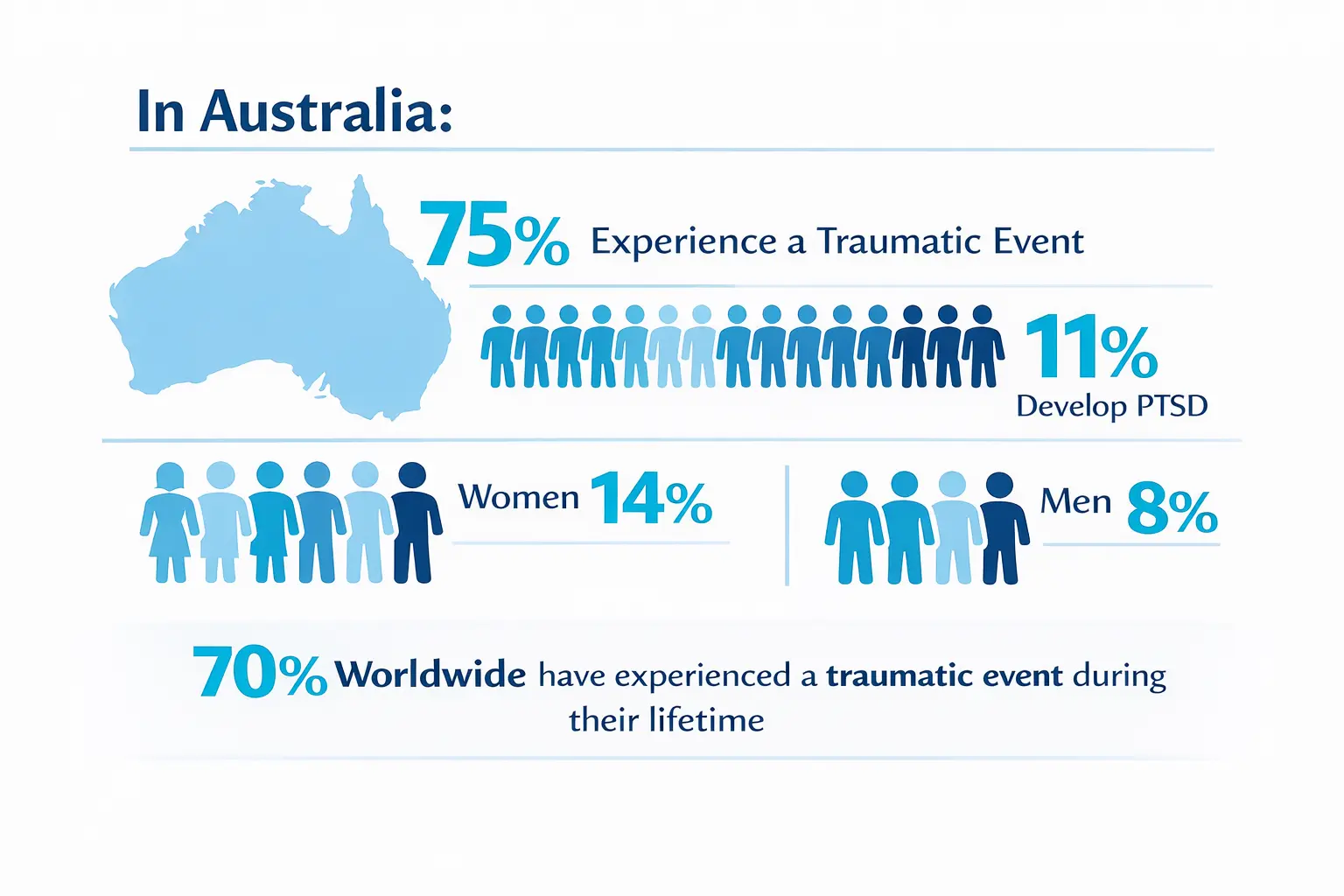
(Australian Institute of Health and Welfare, 2024; ABS, 2022).
It is difficult to get worldwide statistics, as experiences of trauma are so varied. However, in a study of 24 countries, it was found that 70% of people experienced a traumatic event during their lifetime (Benjet et al, 2015), demonstrating similarities in prevalence between Australia and the rest of the world.
Supporting Recovery
If you have been impacted by trauma, be kind to yourself and try to avoid judging or criticising yourself for what you are experiencing. Recognise that what you are going through, while sometimes difficult and confronting, is a normal reaction to an extremely abnormal situation, and that there is help and support available. If you’re caring for someone who has experienced trauma, it’s important to be open-minded, compassionate, and empathetic. You can read more about how to manage your emotions following exposure to a traumatic event in our article, Strategies for Coping After Trauma. You can also reach out to our Live Chat, for support, information and advice.