

Common Causes of Trauma
Key takeaways:
- Trauma is common, with up to 75% of Australians experiencing one potentially traumatic event in their lifetime.
- Trauma is the lasting impact of overwhelming experiences on emotional, psychological, social, and physical wellbeing.
- Trauma can result from many different types of events.
- Trauma can be direct, repeated (complex), or indirect, including vicarious and intergenerational trauma.
- There is no “right” way to respond to trauma, and distress is a normal reaction to extreme events.
- Healing is possible, and support can help restore safety, wellbeing, and connection.
In this article: Potentially Traumatic Events | Causes of Trauma | Vicarious and Intergenerational Trauma
Exposure to potentially traumatic events is common in Australia, with up to 75% of people experiencing one in their lifetime (Benjet et al., 2015). They are called “potentially” traumatic because people respond differently — what is traumatic for one person may not be for another.
Potentially traumatic events are experiences that are dangerous, shocking, upsetting, or overwhelming, and may have lasting physical or psychological effects. They can occur once (single incident trauma) or repeatedly over time (complex trauma). Trauma refers to the ongoing emotional, psychological, social, or physical impact of these experiences.

A lot of things can cause trauma. A lot of people think that trauma, and trauma related mental health conditions such as PTSD, can only happen as a result of certain events like war or armed combat, or that only certain kinds of people, like soldiers or police officers, can experience trauma.
This misunderstanding sometimes leads people to think that their experiences may not be considered trauma, or to minimise their experiences by telling themselves what happened to them ‘isn’t bad enough.’ In reality, there are many different kinds of events that can cause trauma.
Some of the causes of trauma include:
There are also other kinds of ways that trauma can impact people. Some people who are exposed to the details of the trauma experienced by another person, such as hearing about their trauma, seeing videos or photos of their trauma, or reading accounts of trauma may also be impacted. This is known as vicarious trauma, where people experience similar reactions to those who were directly exposed to the trauma, including changes in the way they see themselves and the world (Pearlman & Saakvitne, 1995).
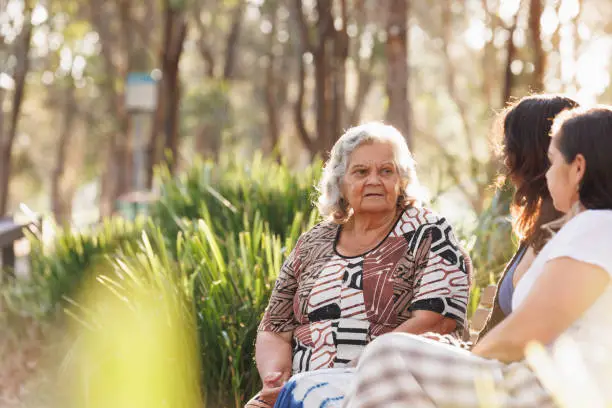
Other people may experience intergenerational trauma. This means that trauma experienced by one generation is passed down to those generations who did not experience the traumatic events directly. This can mean that people who are descendants of those who have experienced trauma may show similar difficulties as those who have experienced the traumatic events directly (Danieli, 1988).
Intergenerational trauma has had a significant impact on Aboriginal and Torres Strait Islander peoples. You can learn more through these videos: What is Intergenerational Trauma, and Warning Signs of Intergenerational Trauma.
Trauma may result from a single event or repeated experiences, and it may affect you or someone you care about in different ways. Some people are not deeply impacted, while others may struggle significantly. Reactions can feel frightening, confusing, or distressing, and no two people respond in the same way. Be patient with yourself or your loved one- these are normal responses to overwhelming circumstances as the mind and body try to cope and make sense of what happened.
This list doesn't include all of the things that may cause trauma or all of the types of trauma that can happen. If you have been through an event, or series of events, that was extremely shocking and frightening to you, and you are experiencing the impacts of it, it is likely that you are suffering from trauma. To read more about the events that can cause trauma, or understand more about the different types of trauma, read our article What is Trauma?
No matter what has happened to you, healing and recovery are possible. Reach out to our Live Chat for information and advice, or read our article Strategies for Coping After Trauma, for some practical steps and advice that can help you manage the impacts of trauma.
References
Benjet, C., Bromet, E., Karam, E. G., Kessler, R. C., McLaughlin, K. A., Ruscio, A. M., Shahly, V., Stein, D. J., Petukhova, M., Hill, E., Alonso, J., Atwoli, S., Bunting, B., Bruffaerts, R., Caldas-de-Almeida, J. M., de Girolamo, G., Florescu, S., Gureje, O., Huang, Y., Lepine, J. P., Kawakami, N., Kovess-Masfety, V., Medina-Mora, M. E., Navarro-Mateu, F., Piazza, M., Posada-Villa, J., Scott, K. M., Shalev, A., Slade, T., ten Have, M., Torres, Y., Viana, M. C., & Zarkov, Z., & Koenen, K. C. (2016). The epidemiology of traumatic event exposure worldwide: Results from the World Mental Health Survey Consortium. Psychological Medicine, 46(2), 327–343. https://doi.org/10.1017/S0033291715001981
Danieli, Y. (Ed.). (2013). International handbook of multigenerational legacies of trauma. Springer Science & Business Media.
Pearlman, L. A., & Saakvitne, K. W. (1995). Trauma and the therapist: Countertransference and vicarious traumatization in psychotherapy with incest survivors. WW Norton & Company.