

Coping After Trauma
Key takeaways:
- The period after trauma can feel overwhelming, but there are practical ways to cope.
- Body-based strategies like breathing, relaxation, and mindfulness can calm the nervous system.
- Grounding helps manage distress, flashbacks, and dissociation.
- Connecting with others supports recovery, even if it feels difficult.
- Early professional help can prevent long-term difficulties and promote recovery.
The time directly following a trauma can be overwhelming and challenging, but there are things that you can do to help you manage and cope.
This article sets out some evidence-based ways to manage the symptoms of trauma and start your journey towards recovery.
In this article: Breathing, Relaxation and Mindfulness | Grounding | Connecting with Others | Self-Care | Make Time for Enjoyment| Helpful Thinking | Getting Practical Support | Connecting with Spirituality, Meaning and Values | Seeking Help
Breathing, Relaxation and Mindfulness
Following a traumatic event, many people feel keyed-up, on-edge, or jumpy. It may be difficult to sleep or relax, and you may find yourself becoming irritable and frustrated. This is because your body and mind are stuck on 'high alert' and are struggling to calm down and stop being on the lookout for danger.
Breathing techniques, relaxation exercises, and mindfulness practices are body based practices that can help you calm your nervous system and 'turn down' your body's alarm system.
Breathing exercises are one way you can take control of your body's natural calming systems and come out of fight or flight mode.
The most effective breathing exercises help you to slow your breathing and have a longer exhale than inhale. One is the 4-4-6 breathing exercise, also known as ‘Commando Breathing’. As the name implies, this breathing exercise was initially created to assist military commandos to concentrate, calm themselves, and perform in high-risk military situations. It's also an extremely effective way to reduce anxiety. Here’s how to do it:
- Inhale deeply for a count of four.
- Hold your breath for a count of four.
- Exhale slowly for a count of 6.
- Hold your lungs empty for a count of four.
- Repeat the cycle.
It works best when you breathe deeply into your stomach rather than your chest. One way to make sure that you are breathing most effectively is to put one hand on your chest and the other on your stomach. Focus on breathing down into your stomach and raise the hand on your stomach higher than the one on your chest with each breath.
You can breathe along with the video below:
Relaxation Exercises are another way that you can help lower your anxiety and calm your body. These techniques focus on finding ways to relax your body and your muscles, helping send the message to your body that it is okay to stop being on the lookout for danger.
One exercise you can try is called Progressive Muscle Relaxation. This technique involves tensing and relaxing different muscle groups in your body in order, helping to release physical tension and promote a sense of relaxation. Here’s how to do it:
1. Start with the muscles in your feet.
2. Tense the muscles in this area for 2-3 seconds.
3. Gradually release the tension and focus on the feeling of relaxation.
4. Move to the next muscle group (e.g. the calves, thighs) and repeat this process.
5. Work your way up through each muscle group, finishing with your face and head.
Mindfulness helps return you to the here and now by focusing intensely on the present moment. This helps to turn your mind away from anxious or upsetting thoughts and remind you that you are safe now (Wästlund et al., 2024).
There are many mindfulness activities that you can try, and various mobile apps to help you run through mindfulness exercises tailored to your needs and preferences.
A note on body based, relaxation and mindfulness exercises
Some people who have experienced trauma may find these exercises make their symptoms worse or that these activities are very threatening and difficult. This is particularly true for exercises that involve focusing on, reconnecting or bringing yourself back into your body. Only do things that you find helpful and never feel pressured to continue these exercises if you find they are making you feel worse. If you’re concerned about trying these exercises, it can be worthwhile discussing them with a healthcare professional before you give them a try.
Grounding
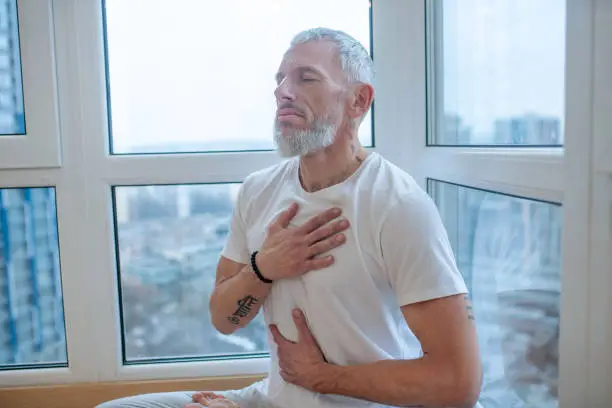
Grounding techniques help rapidly anchor you back to the here and now. They can be particularly helpful when you feel consumed by distressing thoughts and feelings about your traumatic experience, or fears about what may happen. They can also help manage re-experiencing symptoms like flashbacks, and symptoms of dissociation (feeling like you're 'not really here', not in your body, or not like yourself).
You can try a grounding exercise along with our video below.
Repeat this video as many times as you need. If you want to go straight to this video in the future, it's also available here.
Connecting with Others
Research suggests that connecting with others is one of the most helpful ways to support recovery after trauma (Brewin et al., 2000). Although it is common to want to withdraw, spending time with people who care about you can aid healing (Sippel et al., 2024).
Some people avoid social contact due to anxiety or fear of being asked about their experience. You do not have to talk about your trauma if you are not ready. It may help to plan simple responses in advance or seek support from a healthcare professional to manage fears about reconnecting. Spending time with others doing familiar or enjoyable activities can be enough.
Be compassionate with yourself. Rebuilding connection after trauma, especially when abuse has affected confidence or relationships, can be difficult. Move at a pace that feels safe and manageable for you.
To learn more about how to connect with those around you, read our article on Connecting and Reconnecting Socially After Trauma.

Self-Care
Start with the basics. Try to focus on:
- eating healthy food
- moving your body and exercising in ways that feel safe and comfortable to you
- prioritising rest and sleep
- staying hydrated
- avoiding drugs and alcohol
- your practical needs (e.g. shopping, cooking, cleaning) or organising someone to help you with these
Attending to your physical health and basic needs will help your body and mind to begin healing.
Make time for enjoyment
Think about what makes you feel happy and relaxed and build those activities into your daily routine. This will look different for each person, but some ideas include:
- spending time with friends, family, and/or community
- going to the gym or exercising
- gaming, watching TV, or going to the movies
- reading books
- stretching or doing yoga
- gardening
- making art or music
You may find, at first, that you don't enjoy these activities as much as you used to or at all. It's completely normal to feel that way after a traumatic event. The act of doing them is what's important. Be patient with yourself, and over time you will find your sense of enjoyment will slowly return.
Need some ideas for what you can try? Have a look at our 100 Ideas for Self-Care activities. or our list of 100 Ideas for Pleasant Activities. You can download them and check off the activities that boost your mood, to start to build a self-care menu for yourself.

Helpful Thinking
Our thoughts are extremely powerful. They influence the way we see the world, our emotions, and what we do.
Helpful thinking focuses on paying attention to what is going through you mind, and finding ways to see situations that are more supportive of your coping and wellbeing. It's a skill that can take a while to master, and some people prefer to work with a healthcare professional rather than trying to learn it on their own. Read more in our article Helpful Thinking.
Reach out for Practical Support
Directly following a trauma, you are likely to need a hand taking care of the basics. It's okay to reach out for help. Make a plan for what you will need to do practically, such as:
- cooking and meal preparation
- cleaning and household maintenance
- caring for others such as children or parents
- managing work responsibilities
- handling household financials
Consider ways that other people may be able to take some things off your plate for the time being. This may include both social and professional supports. For example, you may use meal delivery services or ask friends or family to cook your meals, you may need to increase or decrease days of childcare, or look at getting someone in to assist with cleaning or maintenance.
Making a plan for how you can manage the day to day can help you to feel a sense of control and reduce anxiety, as well as make sure you are attending to your basic practical needs.
Connecting with Spirituality, Meaning or Values
After a traumatic experience, many people reflect on their life and sense of meaning. Reconnecting with personal values or spiritual beliefs can provide comfort and purpose.
For some, this may involve religious or cultural practices such as prayer, speaking with spiritual leaders, meditation, reading sacred texts, or attending services and rituals. Others may find meaning through time in nature, engaging in values-based activities, or creative and reflective practices such as music or art.
Seeking help
It’s never too soon to reach out for help. Early intervention can be crucial in improving outcomes and enhancing quality of life. Healthcare professionals can help you to design a plan to help you cope and monitor your needs for further care and support.
Some signs that you should reach out for urgent help include:
- thoughts of harming yourself or others
- levels of alcohol or substance use that are putting your life, work, or relationships at risk
- seeing, hearing or feeling things, that other people can’t see or hear (that are not considered a 'normal' part of your culture, or normal way of experiencing culture)
If your symptoms following trauma don’t begin to ease after a few weeks, it’s also important that you reach out for professional help. Your GP is a good place to start. You can read more about Starting the Conversation with Your GP. You can also contact our Support@ email service for information, advice and referral.
References
Brewin, C. R., Andrews, B., & Valentine, J. D. (2000). Meta-analysis of risk factors for posttraumatic stress disorder in trauma-exposed adults. Journal of consulting and clinical psychology, 68(5), 748. https://doi.org/10.1037//0022-006x.68.5.748
Sippel, L. M., Liebman, R. E., Schäfer, S. K., Ennis, N., Mattern, A. C., Rozek, D. C., & Monson, C. M. (2024). Sources of social support and trauma recovery: evidence for bidirectional associations from a recently trauma-exposed community sample. Behavioral Sciences, 14(4), 284. https://doi.org/10.3390/bs14040284
Wästlund, M., Salvesen, K. T., & Stige, S. H. (2024). Clients’ experiences with a trauma-sensitive mindfulness and compassion group intervention: A first-person perspective on change and change mechanisms. Psychotherapy Research, 34(1), 81-95. https://doi.org/10.1080/10503307.2023.2170295